
I’m a Bayesian statistician working on principled AI agent architecture. My PhD work on Chain Event Graphs (Warwick, 2010, supervised by Jim Smith) established foundational methods for Bayesian structure learning that have been cited over 1,750 times. My current research — proplang — is a small language in which a Bayesian decision-theoretic agent is a program, cornered so tightly that its architecture is enforced by the grammar rather than by good intentions. It is the successor to Credence, which brought Value of Information theory to tool-using LLM agents. The core question is the same one that matters for alignment: how do you build agents that know what they don’t know, and act accordingly?
I also build production AI systems. Currently designing agentic flows at Booking.com. Previously: document AI, startup detection models, data governance systems across fintech, insurance, and VC.
Oxford mathematics. Warwick PhD. Based in Tel Aviv.
Open to applied research and senior ML roles, particularly in agent architecture, decision-theoretic AI, and production ML systems. Also available for contract and consulting work.
If you're working on agent reliability, tool use, or evaluation — let's talk.
What I Do
Bayesian Agent Research
Value of Information, conjugate Bayesian models, principled uncertainty quantification. Building agents that maintain beliefs, update from evidence, and decide rather than guess. See proplang and its predecessor Credence.
Production AI Systems
From 27-pipeline document AI processing 500+ files in 20 minutes to agentic flow design at scale. I build things that run in production, not just benchmarks.
LLM Integration & Evaluation
Early adopter (GPT-3 era). Production deployments across multiple industries. Particular focus on evaluating agent reliability — including why accuracy metrics alone mislead.
Research & Writing
1,750+ citations in Bayesian graphical models. Active blog on decision theory and agent architecture. Investigative journalism on startup governance. I write for technical audiences who care about getting things right.
Start here
Five essays that carry the argument. Not the newest — the ones worth reading first.
Why We Stopped Using the Mathematics That Works
Start here literally. The mathematics for making decisions under uncertainty has existed since the 1960s and the field walked away from it — not after weighing it against something better, but because ImageNet made a different bet pay off and nobody looked back.
Sixty-Two Percent Correct and Winning by a Hundred and Twenty Points
What that mathematics buys once you put it in an agent: it answered fewer questions correctly than a ReAct baseline and beat it by 120 points. Knowing more answers is not the same as knowing which answers are worth finding.
The Alphabet Is the Prior
Where the research is now. If hypotheses are programs, every terminal you admit into the language costs a bit against every hypothesis that uses it — so the alphabet is the prior, and design becomes deletion.
Signed Before the Code Existed
The same discipline pointed at coding agents. The acceptance tests were written, hashed and signed before a line of the implementation existed, then handed to an agent that could not change them.
Series
- Disciplining the Coding Agent 4 posts
- Credence 7 posts
- proplang 5 posts
- The Tool-Call Governor 4 posts
- Agents from First Principles 5 posts
Recent Posts
Projects
proplang
gfrmin/proplang
A small language built on one claim: an adaptive Bayesian decision-theoretic agent needs no adaptation machinery. If hypotheses are programs and the prior is 2^-|program| under a grammar, then adaptivity, bounded rationality, and inductive bias stop being modules and become posterior dynamics — so the alphabet of the language is the prior, and the design method is to delete every terminal whose removal costs no …
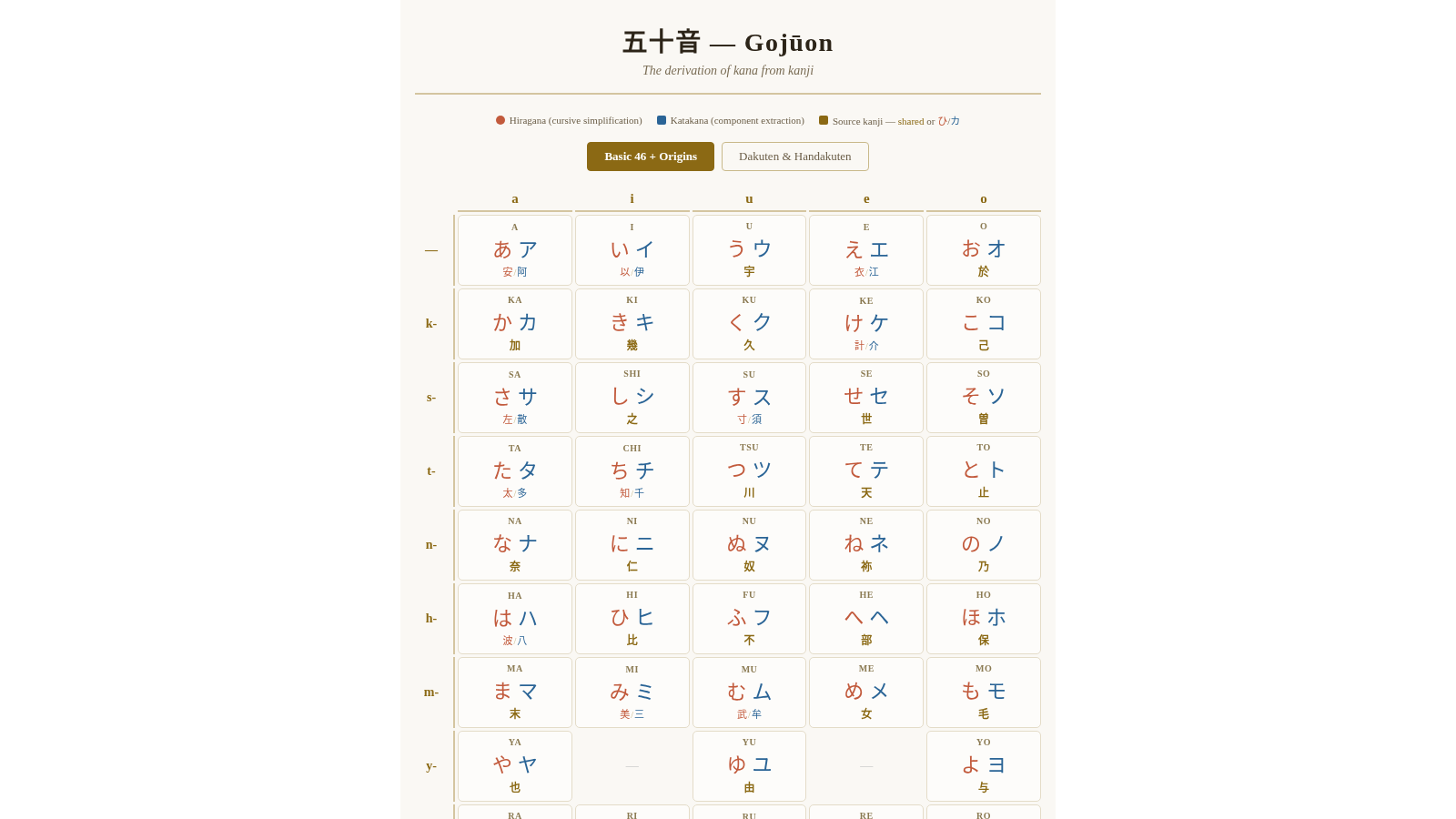
Kana Derivation Chart
An interactive map of how Japan's two phonetic alphabets grew out of kanji. All 46 basic syllables sit in a grid by consonant and vowel, colour-coded by script; click any cell to trace both descents …
life-agent
The composition root for a personal life-management agent — an assistant that remembers your whole digital life, reasons under uncertainty, and acts across your tools. It reinvents nothing: every …
credence-pi
A Bayesian governance layer that decides which of a coding agent's tool calls to allow, block, or pause for human approval — and learns where the line sits from the agent's own behaviour. The design …
pkm
A content-addressed extraction cache and catalogue for personal knowledge management. It ingests documents, routes each through a format-appropriate extractor — pandoc, docling, unstructured — and …
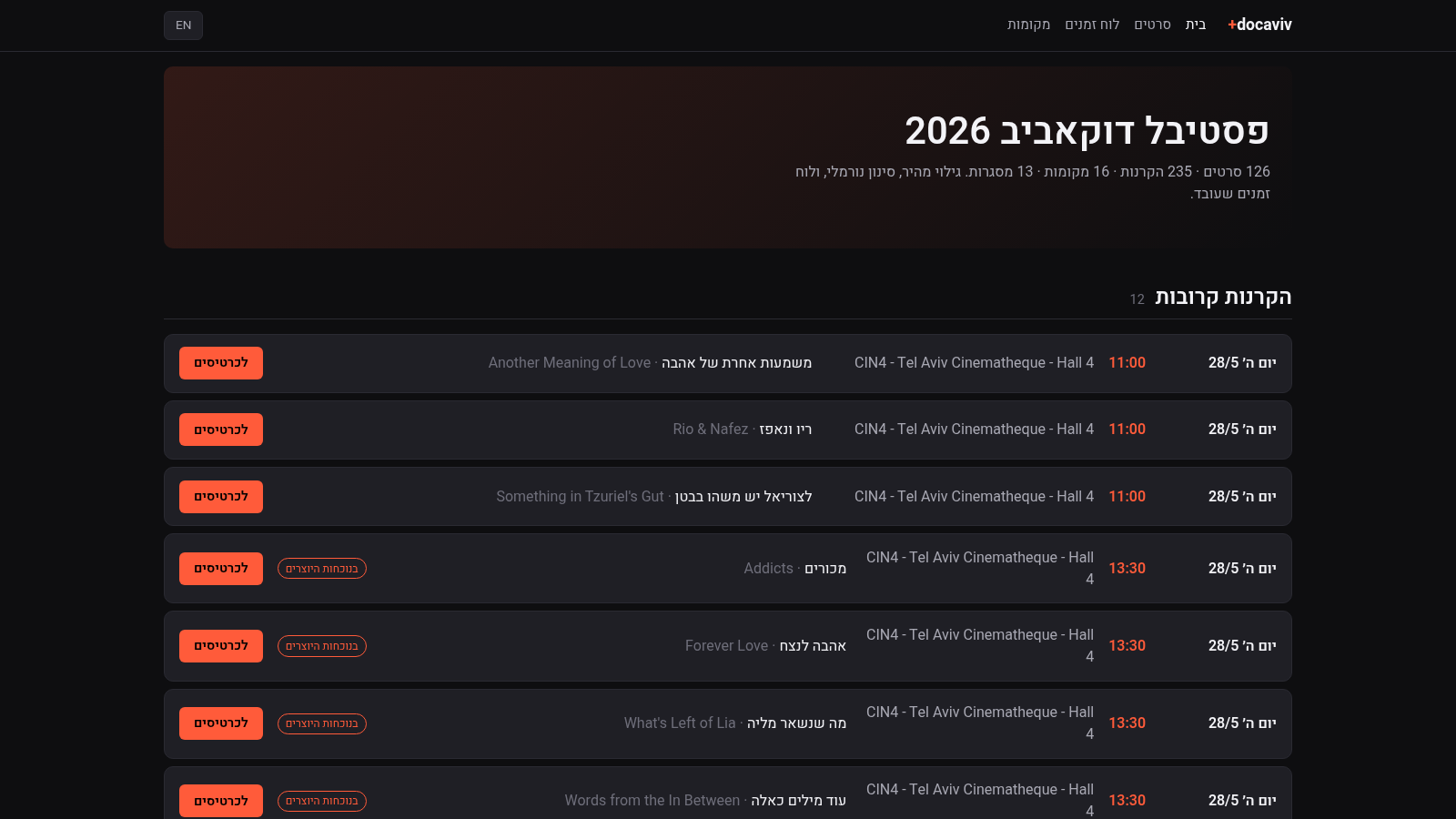
docaviv+
A faster, phone-friendly way to browse the Tel Aviv International Documentary Film Festival than its official site. Bilingual Hebrew/English with full RTL, fuzzy search, a day-by-day schedule grid, …

accessinfo.hk
Hong Kong's Freedom of Information platform: citizens file requests to government bodies and track the replies in the open. Every exchange stays on the public record, accreting a searchable archive of …

Webb Data
An open archive of 35 years of Hong Kong corporate data — directors, board memberships, CCASS shareholdings, and company-registry filings — cross-linked so you can follow who sits on which boards and …